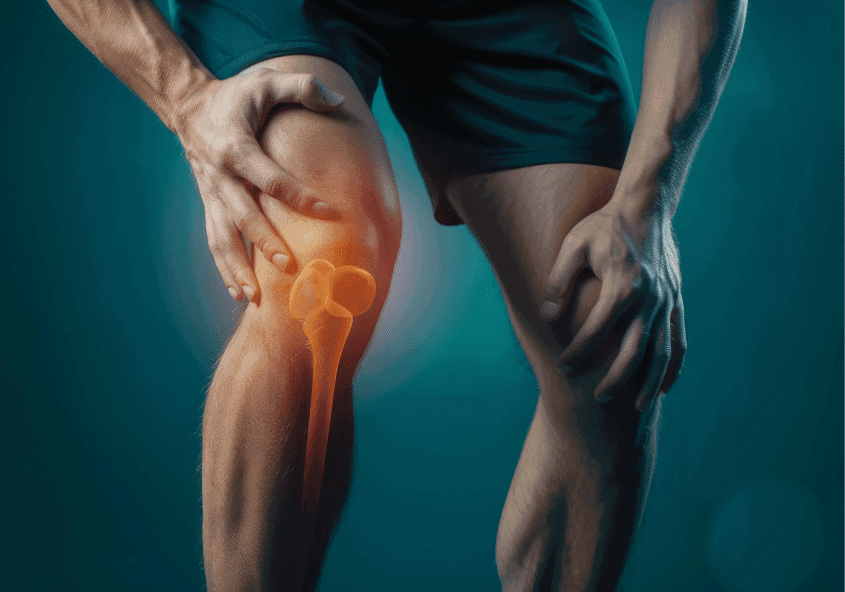
Knee
Meniscus Tears: A Common Knee Injury
The meniscus is a C-shaped piece of cartilage that acts as a shock absorber in the knee, sitting between the femur and tibia. There are two in each knee — the medial meniscus (inner side) and the lateral meniscus (outer side).
- What causes a tear: A sudden twisting or pivoting motion (common in football, basketball, and soccer), a direct blow to the knee, or — in some cases — simple degenerative wear from aging.
- Symptoms: Pain (often localized to one side of the knee), swelling, a locking or “giving way” sensation, popping or clicking, and difficulty fully bending or straightening the knee. Sharp pain during activity, or a sense of the knee locking or giving way, are classic signs worth getting checked.
- Diagnosis: A physical exam and symptom history, sometimes followed by imaging (MRI or X-ray) to confirm.
Treatment options:
- Non-surgical — rest and ice, physical therapy, over-the-counter anti-inflammatories. Cortisone injections can reduce pain but don’t promote healing. PRP injections have shown promise for reducing pain and improving function in both osteoarthritis and meniscus tears.
- Surgical — arthroscopic repair or removal of the damaged tissue is most common; open surgery (meniscectomy) is used in select cases.
Recovery: Varies by severity and treatment type — non-surgical approaches typically mean a shorter recovery, while surgery may involve several weeks to months of rehabilitation. With proper treatment and follow-through on physical therapy, most patients return to their normal activities.
If you think you have a meniscus tear, Dr. Grimsley can evaluate it and build a treatment plan.