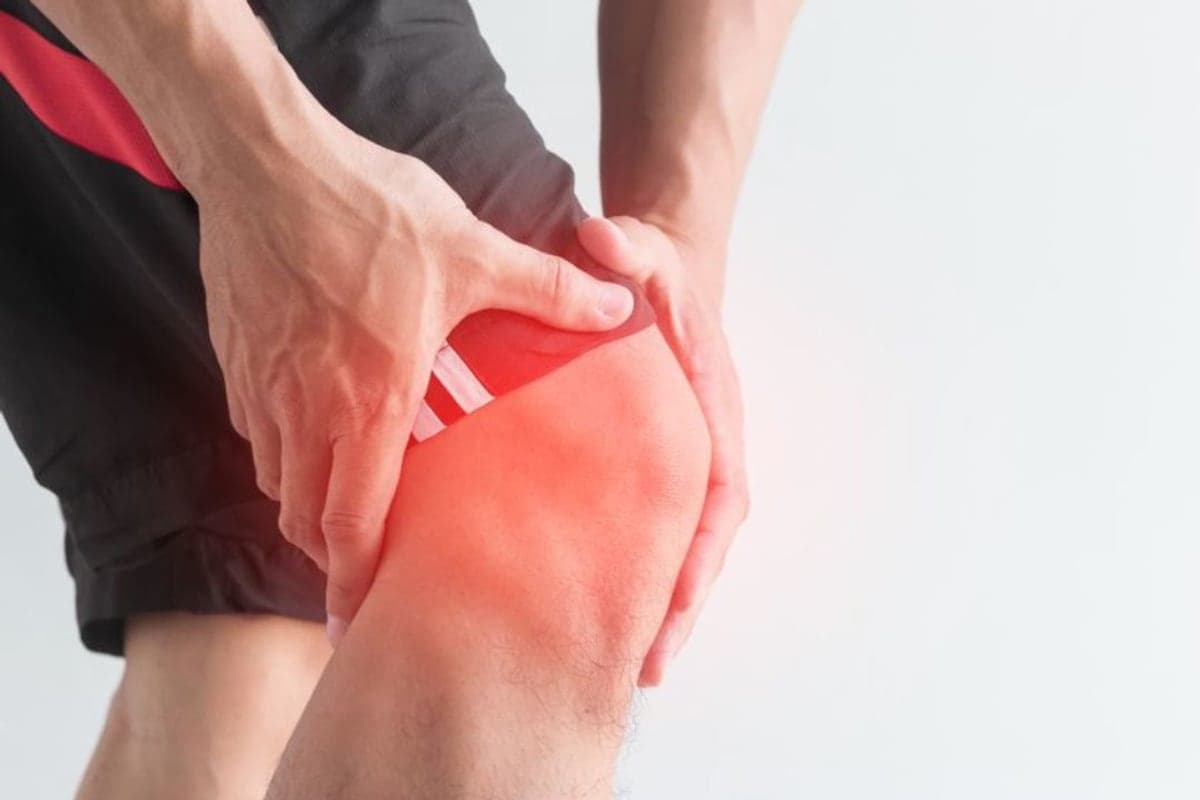
Understanding Knee Pain
Your knees do more work than almost any other joint — bearing most of your body weight while staying both flexible enough to bend and stable enough to hold you up. It’s a complex design: the knee relies on three bones (the femur, tibia, and patella) and cartilage that lets them glide smoothly against each other. When that cartilage wears down — as it does with osteoarthritis — the joint stiffens, swells, and can develop a “locking” or “buckling” feeling as bone increasingly meets bone.
How do you know if it’s arthritis, or just overuse? Arthritis pain tends to build gradually and can come from several sources at once — joint lining inflammation, strained tendons or ligaments, general fatigue — which is part of why it’s hard to diagnose on your own. Many patients also notice pain and stiffness are worse in the morning or after sitting, ease up with movement, and sometimes shift with the weather.
Non-inflammatory pain tends to worsen with activity and by day’s end; inflammatory pain is often worst first thing in the morning or after rest. Either way, the clearest sign is simply doing less than you used to.
If knee pain is keeping you up at night, it’s time to see a doctor.

Alternatives to Knee Replacement
There’s more than one path to managing knee arthritis, and treatment often combines several approaches:
- Medication — over-the-counter pain relievers and anti-inflammatories for mild cases; prescription options, disease-modifying drugs, or hyaluronic acid injections (which lubricate the joint and may offer mild pain relief) for more significant pain
- Exercise and physical therapy — the golden rule: the more you move, within reason, the less stiffness you’ll have. Low-impact activities like walking, swimming, and cycling tend to work best.
- Heat or cold — heating pads and ice packs offer real, if short-term, relief
- Pacing yourself — alternating activity with rest keeps your joints from tiring under repeated stress
- Easing the load — using your bigger muscles and joints to carry weight, using assistive devices when needed, and managing your weight all reduce stress on the knee
- Support — arthritis takes an emotional toll too; talking with family, friends, or a local support group can help you manage the day-to-day of living with it
When Should You Consider Surgery?
Knee replacement is one of the most common and successful surgeries performed today — more than 700,000 a year in the U.S. — with over 90% of patients seeing a dramatic improvement in pain and function. It’s still surgery, though, and worth pursuing only once less invasive treatments have stopped helping.
Signs it might be time:
- Knee pain disrupts your sleep
- Medication and a cane no longer help
- You’re less mobile than you’d like, and activity brings pain
- Getting in and out of chairs, cars, or the bathtub is difficult
- You notice swelling, stiffness, or a “grating” feeling in the joint
- Walking or climbing stairs is a struggle
- Your range of motion has noticeably decreased
The goal of surgery is straightforward: relieve pain, restore motion, correct any deformity, and give the joint back its stability. In some cases, arthritis is limited to just one part of the knee — if that’s true for you, a partial knee replacement may be an option instead of a full one, preserving more of your natural joint. Dr. Grimsley can tell you which approach fits your specific case.
What to Expect if You Wait
Knee arthritis is progressive — it won’t reverse on its own, and no diet, supplement, or exercise routine will stop it, though how quickly it advances varies from person to person. Eventually, medication typically stops being enough; a good week here and there doesn’t mean the arthritis is improving.
The decision is entirely yours — you’ll never need a knee replacement if you’re willing to live with the pain. But waiting isn’t without cost: becoming sedentary to protect the joint actually accelerates muscle and bone loss. Research published in the New England Journal of Medicine found that surgery outperforms non-surgical treatment for pain relief and function — 85% of patients who received a knee replacement reported meaningful improvement, compared with 68% who stuck with non-surgical care alone.
Full recovery typically takes three to six months, and most patients are 70–80% recovered within the first month alone. Modern implants hold up well: about 85% last 20 years, though excessive activity or added weight can accelerate wear. One study found 90% of patients were satisfied with their knee replacement a year out — among the highest satisfaction rates of any major orthopaedic surgery.
Benefits of Knee Replacement
“Think of it like resurfacing a road full of potholes,” Dr. Grimsley says.
During surgery, the damaged cartilage — along with a small amount of bone — is removed and replaced with an artificial surface. If your arthritis is limited to one or two areas, a partial replacement can preserve the healthy parts of your knee instead.
- Less pain, better mobility. More than 90% of patients see a dramatic reduction in pain and real improvement in function.
- A more active, independent life. Less pain and better mobility mean getting back to the daily tasks — and the activities — you’ve had to give up.
(One honest caveat: a knee replacement restores function, but it won’t let you do more than you could before arthritis set in.)
Risks to Know
As with any major surgery, knee replacement carries some risk — infection, joint instability, blood clots, wound irritation, and slight differences in leg length. Nerve or blood vessel injury is uncommon, occurring in less than 1% of patients, usually related to scar tissue from a prior surgery. Fractures during the procedure are rare but somewhat more common in revision surgery. Complication rates run meaningfully higher for patients who smoke, are significantly overweight, or have uncontrolled diabetes — all things we’ll talk through with you beforehand.