
Understanding Hip Pain
Osteoarthritis — the leading cause of disability in the U.S. — is the most common reason people need hip replacement. As the cartilage cushioning your hip joint wears away, the bones begin rubbing directly against each other, causing pain that tends to build gradually over time (though it can come on suddenly too).
How do you know if it’s arthritis, or just overuse? Arthritis pain can come from several sources at once — inflammation in the joint lining, strained tendons or ligaments, general fatigue — which is part of why it can be hard to pin down on your own.
The hip is especially prone to pain: it’s one of the body’s largest, deepest joints, with a wide range of motion, and pain can originate from surrounding muscles, tendons, or bursae even when the joint itself is healthy. True hip arthritis pain is usually felt in the groin or front of the thigh — not the buttock — and can radiate all the way down to the knee, since the hip and knee share overlapping nerves. In fact, for some patients, knee pain is the only symptom of hip disease.
Common signs of hip arthritis:
- A limp, or one leg feeling shorter than the other
- A “creaking” sensation when walking
- Pain after sitting for a while, especially the first few steps
- Needing to stop and rest after walking short distances
- Difficulty getting in and out of a car, climbing stairs, or tying your shoes
Non-inflammatory arthritis pain tends to worsen with use and by day’s end; inflammatory pain is often worst in the morning or after rest, and eases with heat and gentle movement. Either way, the clearest sign is simply doing less than you used to.
Of course, hip pain isn’t always arthritis — it could be sciatica, a herniated disc, bursitis, or a strain. Dr. Grimsley can help you sort out what’s actually causing it.
If hip pain is keeping you up at night, it’s time to see a doctor.
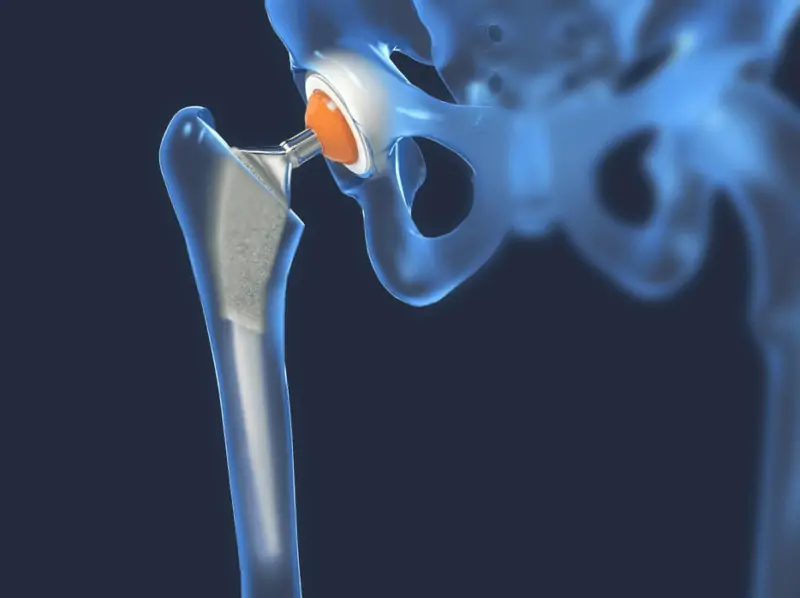
Alternatives to Hip Replacement
Most patients start with non-surgical care:
- Lower-impact activity — swapping walking for cycling, for example
- Staying active, within reason — patients who remain moderately active often do better long-term than those who become sedentary, which accelerates muscle and bone loss
- Weight loss — every pound lost reduces roughly three pounds of stress on the hip during normal walking
- A cane or walking aid — properly sized and held on the side opposite the affected hip, a cane can reduce joint force by several hundred pounds
- Medication — over-the-counter options for mild pain; for more significant pain, your doctor may discuss NSAIDs, corticosteroid injections, or, in select cases, short-term opioid medication under close supervision
When Should You Consider Surgery?
Hip replacement is one of modern medicine’s most successful procedures — but it’s still major surgery, and it’s always an elective decision. It’s worth discussing once you’ve exhausted reasonable non-surgical options and feel physically and emotionally ready for both the operation and the recovery that follows.
Signs it might be time:
- Hip pain disrupts your sleep
- Medication and a cane no longer help
- Pain keeps you from social activities — church, shopping, travel
- Getting in and out of chairs, cars, or the bathtub is difficult
- Sitting for more than 30 minutes is hard
- Walking or climbing stairs is a struggle
- Your range of motion has noticeably decreased
What to Expect if You Wait
Hip arthritis is progressive — it doesn’t reverse on its own, and no diet, supplement, or exercise routine will stop it. How fast it progresses varies widely from person to person, and some people tolerate the decline better than others. Eventually, though, medication typically stops being enough; a good week here and there doesn’t mean the underlying arthritis is improving.
The decision is entirely yours — you’ll never need a hip replacement if you’re willing to live with the pain. But waiting isn’t free of consequence: becoming sedentary to “protect” the joint actually accelerates muscle and bone loss, which can compound other risks as you age. Research increasingly suggests that patients who have surgery before joint damage becomes severe tend to recover more easily and see better outcomes — so if you already know you’ll need the surgery eventually, there’s often little upside to delaying it.
Full recovery typically takes three to six months, depending on the procedure, your overall health, and how closely you follow your rehab plan. Most replaced hips have a 90–95% chance of lasting 10 years, and 80–85% chance of lasting 20.
Benefits of Hip Replacement
- Less pain. Initial post-surgical discomfort fades within a few weeks; most patients see their hip pain eliminated or significantly reduced after that.
- Better mobility. As pain subsides and you use the joint more, your legs grow stronger — meaning easier, less fatiguing movement.
- A more active, independent life. Less pain and better mobility add up to doing more of what you actually want to do.
Risks to Know
As with any major surgery, hip replacement carries some risk — infection, blood clots, nerve or blood vessel injury, joint dislocation, and slight differences in leg length. Complication rates run meaningfully higher for patients who smoke, are significantly overweight, or have uncontrolled diabetes — all things we’ll talk through with you beforehand. Overall, more than 98% of hip replacement patients have no major complications.